


1. Innovation in the treatment of flavouring and sweetening of feed.
2. Promotes and sells products in many countries through distributors and professionals.
Aromas &
Flavours


Smell and taste are the result of a very complex physiological system.
In addition, they are the responsibles for the gastro-intestinal reflex and secretory phenomena which lead to improve the Feed Intake and Feed Efficiency.
All these aspects are taken into consideration to design our
Aromas, Flavours and Sweeteners.
Animal Physiology
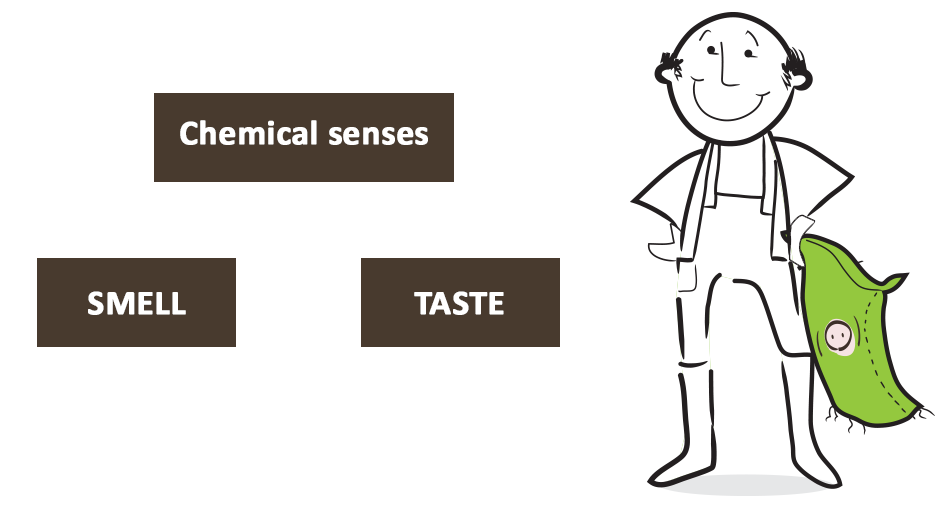
Chemical senses are responsible for reflex and secretory phenomenas which lead to improvements in:
Feed Intake and Feed Efficiency
Secretory Phenomena
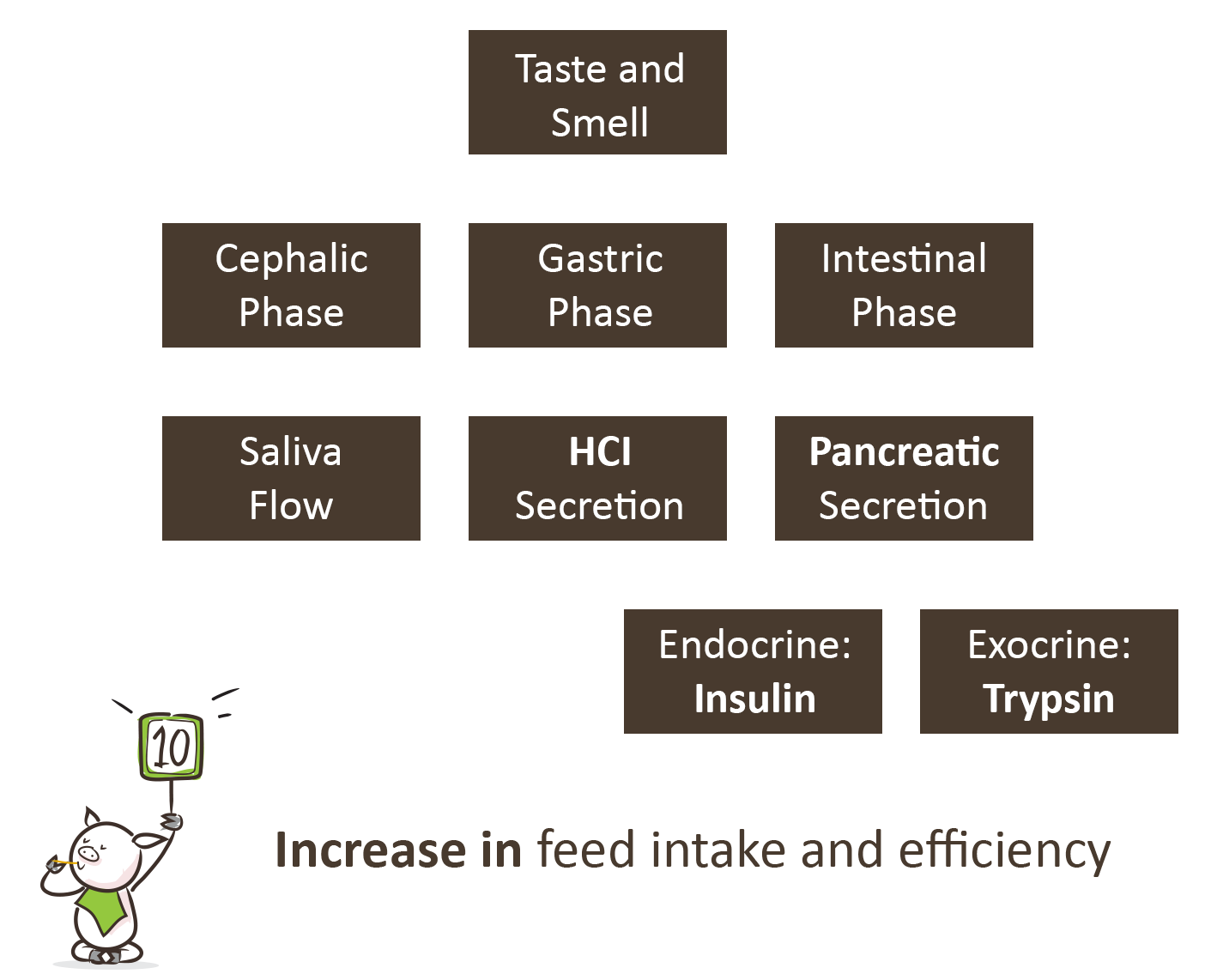
SMELL Physiology
Chemical smell is the
result of a very complex
physiological system
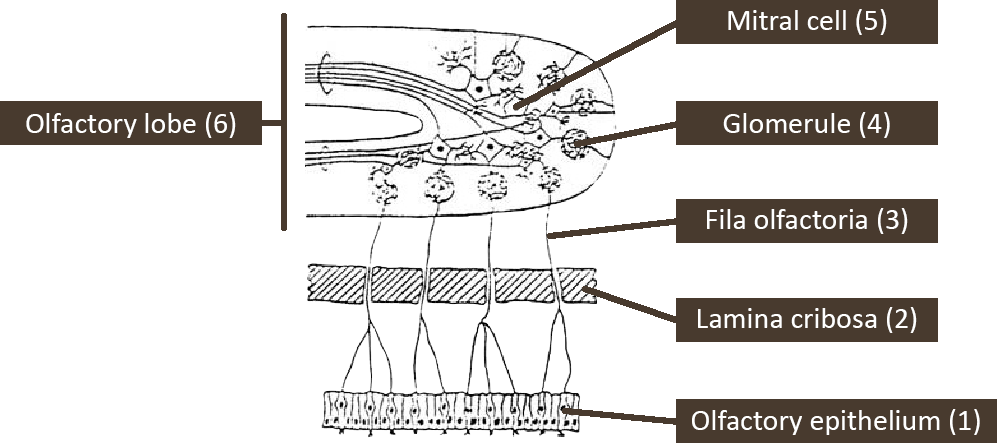
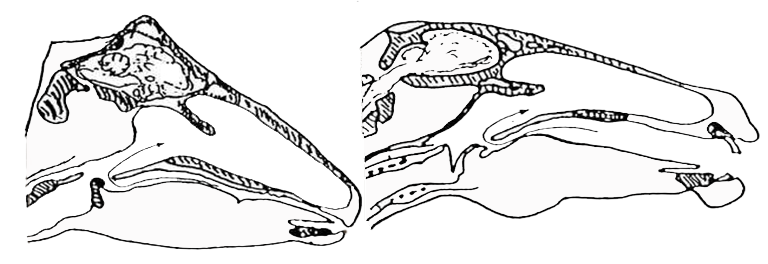
Smell (Interspecies differences)
The size and number of cells
in the olfactory epithelium is
much higher in domestic mammals
than in man and birds.

Smell (Interspecies differences)
Domestic mammals achieve the most complex
rate of intertwining in the olfactory cells
( = higher capacity of amplifying the signal).
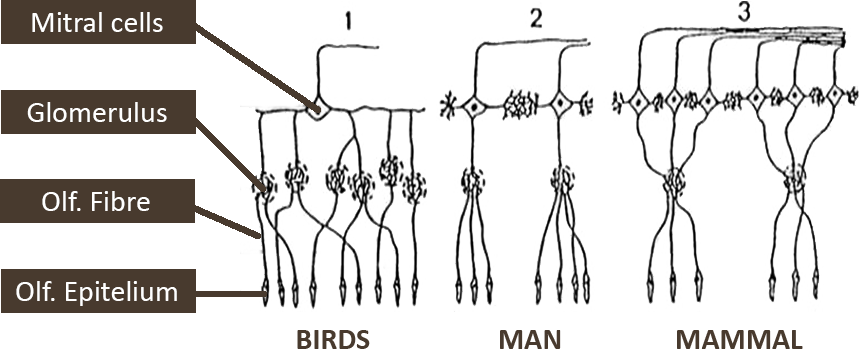
Smell (Interspecies differences)
Minimal Detection or Olfactory thresholds (mg/l air):

Because of the lower olfactory thresholds, domestic mammals can smell substances at very low concentrations, which man can not detect.
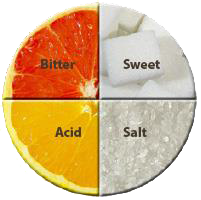
TASTE Physiology
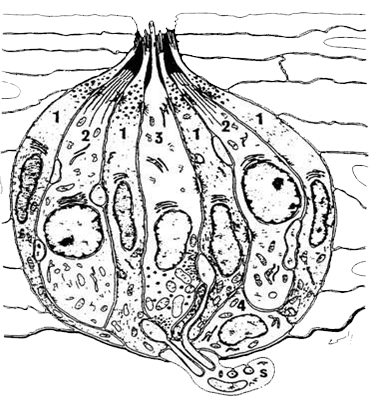
Taste (Interspecies differences)
Domestic mammals have from 2 to 4 times
more taste buds than man.
Number of taste buds in different species:

Smell-Taste Conection
The oronassal cavity connects the nose and the mouth enabling a crucial interaction between smell and taste.

1. A good flavour
must attract
animals to
the feed.
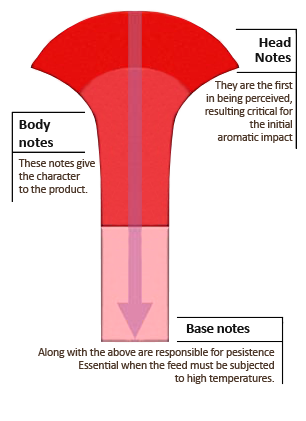
2. The aromatic fraction
can be divided into
three notes sweeteners.

Preferencias Gustativas
1. Pigs
Cinnamon, vanilla, toasty notes, berries
2. Rumianants
Orange, coconut, herbal, vanilla
3. Suckling animals
Lactic, fruity milk, fruity
4. Rabbit
Herbal, anise, thyme

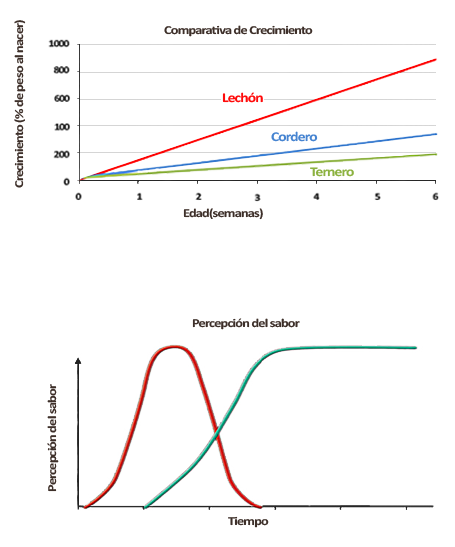
Number of
taste buds

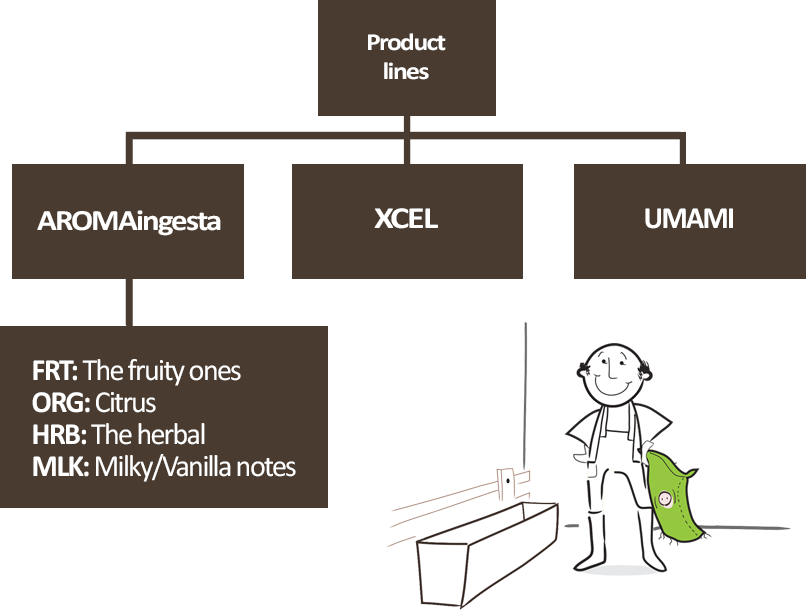
1. Sweeteners based
in saccharin
and neohesperidine
2. Optimize
ingesta
1. Aromatization and flavouring designs. Tailored products and solutions.
2. Able to adapt to any particular situation.
3. One of our experts will design and show "in-situ" diferent possibilities for each need.
4. Feed flavouring combining powder and liquid products.

Once decided the product,
Ingesta will set up all the
mechanical components
needed for the implementation.
Pumps and containers will be installed
maintained and controlled by our staff.

When we aromatize our premixes or kernels
we want our aroma, which is our stamp, to
stay there for a period of time.
To verify that this is accomplished, our
technicals will reach an agreement with
you about how to carry out the follow-up in
different lots of manufacture doing
organoleptic analysis every 2 weeks.

This is what we mean by
Flavour attitude.
Our slogan and, aminly
our mision and philosophy.

Thank you for your attention.
Contact us:
Phone +34 935 528 537
Web: www.ingesta.cat
E-mail: ingesta@ingesta.cat